
Power of Ganapathy Sachchidananda Swamiji🔥: Peetham, Ashrams, Wealth, Influence and Global Spiritual Network
👁 9 Views

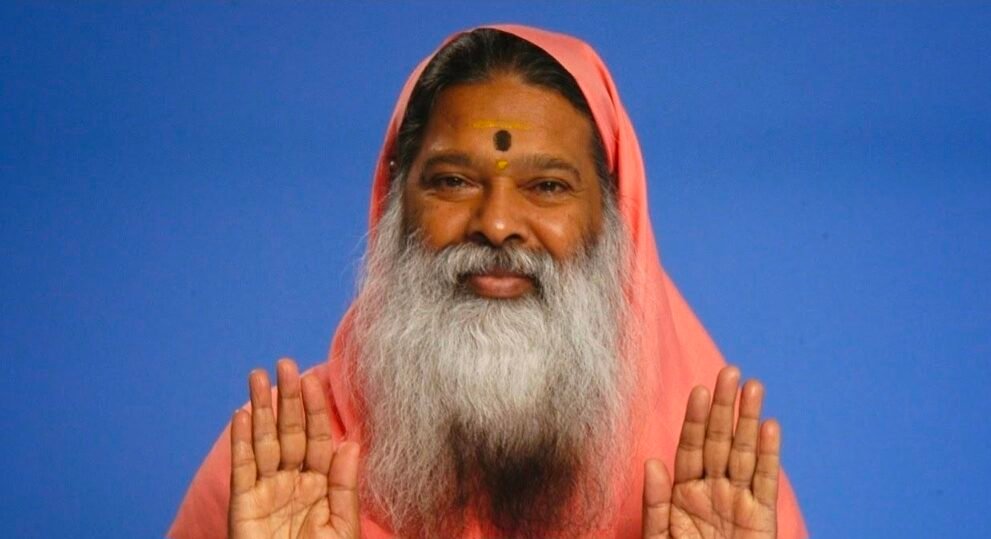
An independent research report on Ganapathy Sachchidananda Swamiji, Avadhoota Datta Peetham, Mysuru headquarters, Hyderabad Ashram, international centres, charitable activities and institutional influence—
Ganapathy Sachchidananda Swamiji: Understanding the Spiritual Institution Behind the Name
India has a long tradition of spiritual institutions built around influential gurus, religious traditions and established Peethams. Some remain confined to a particular geographical region, while others develop extensive networks across India and internationally.
One such spiritual personality is Sri Ganapathy Sachchidananda Swamiji, the founder and pontiff of Avadhoota Datta Peetham, headquartered in Mysuru, Karnataka.
An examination of his institutional activities reveals an organisation that extends beyond conventional religious preaching. Its activities include temples, spiritual education, music, yoga, charitable healthcare, animal welfare, cultural programmes and international religious centres.
This independent research examines his spiritual identity, institutional structure, geographical presence, infrastructure and public influence, with particular attention to his presence in Telangana.
1. Who Is Ganapathy Sachchidananda Swamiji?
Sri Ganapathy Sachchidananda Swamiji was born on 26 May 1942. He is recognised as the founder of Avadhoota Datta Peetham and is associated with the Dattatreya spiritual tradition.
His spiritual teachings are rooted in the philosophy of Lord Dattatreya, who represents the combined principles of Brahma, Vishnu and Maheshwara.
Swamiji’s spiritual activities include:
– Dattatreya worship and religious programmes.
– Vedic traditions and spiritual education.
– Meditation and yoga.
– Bhajans and devotional music.
– Nada Chikitsa and music-based meditation.
– Charitable and humanitarian activities.
– International spiritual programmes.
Unlike an individual religious speaker who conducts occasional public discourses, Swamiji heads an established institutional organisation with multiple centres and dedicated infrastructure.
2. Where Does Ganapathy Sachchidananda Swamiji Stay?
The principal headquarters of Sri Ganapathy Sachchidananda Swamiji is the Avadhoota Datta Peetham at Datta Nagar, Ooty Road, Mysuru, Karnataka.
The institution is situated near Chamundi Hill and is described by the Peetham as occupying approximately 40 acres.
The Mysuru Ashram is the central location for his religious, administrative and spiritual activities.
The institution’s history traces its beginnings to a modest hut in 1966. Over the years, it developed into a large spiritual complex.
It is important to distinguish his permanent institutional headquarters from his personal daily residence. Swamiji undertakes spiritual tours and visits different ashrams, and his exact daily residence should not be assumed without specific confirmation.
3. What Is Avadhoota Datta Peetham?
Avadhoota Datta Peetham is the principal spiritual institution established by Sri Ganapathy Sachchidananda Swamiji.
Its philosophy and activities are centred on Lord Dattatreya and the Avadhoota spiritual tradition.
The Peetham is not merely a temple complex. It functions as a broader religious, cultural and service-oriented institution.
Its major areas of activity include:
1. Religious worship and spiritual programmes.
2. Vedic and Sanskrit traditions.
3. Yoga and meditation.
4. Music and cultural activities.
5. Charitable healthcare.
6. Annadanam and social service.
7. Animal and bird welfare.
8. International spiritual outreach.
The institutional structure enables its activities to extend beyond Mysuru through associated ashrams and centres.
4. How Big Is the Organisation? Its National and International Network
One of the most interesting aspects of Avadhoota Datta Peetham is its geographical reach.
According to figures published by the organisation, its network includes:
– More than 80 centres in India.
– Approximately 15 overseas centres.
– Multiple Dattatreya temples and spiritual centres.
– International spiritual programmes and tours.
The organisation has reported activities and centres in countries including the United States, United Kingdom, Canada, Australia and Malaysia, along with locations in Europe and other regions.
These figures demonstrate the scale claimed by the institution. However, a comprehensive independent census of active branches and their current operational status would be necessary to establish the exact present-day network.
The international presence also suggests that the Peetham’s activities are not restricted to Karnataka or southern India.
5. The Mysuru Ashram: More Than a Religious Centre
The Mysuru headquarters has several distinctive facilities that demonstrate the institution’s wider activities.
Shuka Vana – A Unique Bird Rehabilitation Initiative
One of the notable facilities associated with the Ashram is Shuka Vana.
It is described as a bird rehabilitation and conservation centre.
According to the institution’s published information, the facility houses more than 2,000 birds representing approximately 486 species.
Its activities include bird care, rehabilitation and treatment of injured birds.
Nada Mantapa – A Centre for Music and Spiritual Culture
Nada Mantapa is another important facility at the Mysuru Ashram.
The auditorium is associated with spiritual music, devotional performances and cultural programmes.
The institution describes it as having approximately 35,000 square feet of space.
Music is a particularly distinctive component of Swamiji’s spiritual identity.
Bonsai Garden
The Ashram also maintains the Kishkindha Moolika Bonsai Garden, which reportedly contains more than 450 miniature trees.
This initiative reflects the institution’s interest in horticulture and environmental appreciation.
Goshala
The Mysuru Ashram maintains a Goshala for the care and maintenance of cows.
The Peetham’s published information reports more than 50 cows at its Mysuru facility.
These facilities illustrate how the institution combines religious activities with animal welfare, environmental initiatives and cultural infrastructure.
6. Ganapathy Sachchidananda Swamiji’s Unique Identity: Nada Chikitsa and Spiritual Music
One of the most distinctive features of Sri Ganapathy Sachchidananda Swamiji is his association with devotional and spiritual music.
His music-related activities are often described through the concept of Nada Chikitsa.
The underlying idea is that music, sound and disciplined listening can support relaxation, meditation and spiritual concentration.
His musical identity is associated with:
– Devotional bhajans.
– Sanskrit compositions.
– Indian classical musical traditions.
– Meditation-oriented music.
– International music programmes.
The institution’s published biography records thousands of compositions and devotional works.
This musical identity gives him a distinctive position among spiritual leaders whose public activities are primarily based on religious discourses and traditional rituals.
7. Charitable Activities and Social Service
An important component of the Peetham’s institutional identity is its social-service activity.
Its publicly described initiatives include:
– Healthcare and medical services.
– Medical camps.
– Eye-care programmes.
– Food distribution.
– Annadanam.
– Assistance to vulnerable communities.
– Animal welfare initiatives.
The institution is also associated with hospital and healthcare initiatives in Mysuru.
These activities demonstrate that the organisation’s work extends into humanitarian and public-service areas.
However, an accurate assessment of its annual charitable expenditure, number of beneficiaries and financial contributions would require audited financial statements and activity reports.
8. Ganapathy Sachchidananda Swamiji’s Presence in Telangana
The Peetham has a significant institutional presence in Telangana through its Bhagyanagar Ashram at Dundigal, Hyderabad.
The Hyderabad Ashram is associated with several religious and service-oriented facilities, including:
– Datta Avadhoota Temple.
– Marakata Karyasiddhi Anjaneya Temple.
– Rajarajeshwari Temple.
– Navagraha temples.
– Annapurna Mandiram.
– Goshala.
– Medical and charitable activities.
– Ammavodi initiatives.
The Datta Avadhoota installation at the Ashram dates to 17 November 1989.
The new temple complex underwent Maha Kumbhabhishekam on 15 April 2024.
The presence of this Ashram is particularly relevant because it demonstrates that the Peetham has an established institutional connection with Hyderabad and the wider Telangana region.
It is not simply a visiting spiritual organisation.
9. Political and Administrative Recognition
Another dimension worth examining is Swamiji’s public interaction with political and administrative personalities.
On 1 November 2026, Swamiji visited Dhanwada in Bhupalpally district and Manthani in Telangana, following an invitation from Telangana Minister Duddilla Sridhar Babu.
The reported programme included religious ceremonies and public darshan.
The event was attended by several political and administrative personalities, including:
– Minister Duddilla Sridhar Babu.
– Peddapalli MLA Chintakunta Vijaya Ramana Rao.
– Ramagundam MLA Makkhan Singh Thakur.
– District Collector Rahul Sharma.
– District Superintendent of Police Sirisetti Sankeerth.
Such events demonstrate the public recognition and access enjoyed by Swamiji within political and administrative circles.
However, the presence of political leaders at religious programmes should not automatically be interpreted as evidence of political control or direct influence over government decisions.
His institutional and social standing should be assessed separately from political relationships.
10. Who Is the Successor to Ganapathy Sachchidananda Swamiji?
Institutional continuity is an important consideration when studying large spiritual organisations.
The Peetham identifies Sri Datta Vijayananda Teertha Swamiji, popularly known as Bala Swamiji, as its junior pontiff and spiritual successor.
This is relevant because large religious institutions require continuity in spiritual leadership, administration and institutional activities.
The presence of a recognised junior pontiff provides an established framework for leadership succession.
11. How Powerful Is Avadhoota Datta Peetham?
The institutional strength of a spiritual organisation should not be measured only by the popularity of its founder.
Several indicators provide a more meaningful assessment.
Institutional factor| Research assessment
Spiritual identity| Established Dattatreya tradition
Headquarters| Large Mysuru Ashram
Indian presence| 80+ centres claimed
International presence| 15 overseas centres claimed
Cultural infrastructure| Nada Mantapa and music programmes
Animal welfare| Shuka Vana and Goshala
Charitable services| Medical and social-service initiatives
Telangana presence| Established Hyderabad Ashram
Leadership continuity| Junior pontiff identified
Political visibility| Documented interaction with public representatives
On the basis of these indicators, Avadhoota Datta Peetham can be described as a substantial religious and cultural institution with a national and international footprint.
What We Could Not Establish Independently
A complete financial assessment requires further documentary investigation.
The following figures should not be assumed without official financial records:
1. Total net worth of the institution.
2. Total value of its land and buildings.
3. Annual donations and income.
4. Total number of registered devotees.
5. Total number of employees.
6. Consolidated financial strength of all associated centres.
These are important areas for further investigation.
12. Conclusion: A Spiritual Leader With an Established Institutional Network
Sri Ganapathy Sachchidananda Swamiji represents an interesting example of how a spiritual movement can develop into a large institutional network.
From its beginnings in Mysuru, Avadhoota Datta Peetham has developed activities spanning religious worship, music, cultural programmes, healthcare, animal welfare and international spiritual outreach.
Its Hyderabad presence further demonstrates its importance in the Telangana spiritual landscape.
The organisation’s strength is not limited to the personal popularity of its founder. Its ashrams, facilities, international activities, charitable programmes and leadership structure form an important part of its institutional identity.
A complete understanding of its financial and administrative strength would require examination of trust registrations, audited accounts, property records and annual reports.
This research therefore approaches Ganapathy Sachchidananda Swamiji not merely as a spiritual personality, but as the founder of an established religious, cultural and charitable institution whose wider organisational structure deserves further examination.
—
Research Sources and References
The following institutional and news sources were consulted for this research:
1. Avadhoota Datta Peetham – Official Website: https://www.dattapeetham.org/
2. Sri Ganapathy Sachchidananda Swamiji – Official Biography: https://www.dattapeetham.org/
3. SGS Ashrams: https://www.sgsashrams.org/
4. SGS Hospitals: https://sgshospitals.org/
5. Deccan Chronicle – Telangana visit coverage, November 2026.
Editorial Note – Telangana Reporter: This article is an independent research-based overview prepared using publicly available institutional information and news reports. Figures published by the Peetham are attributed to the institution and should not be interpreted as independently audited statistics. The article does not constitute an endorsement or criticism of any individual or religious organisation.
Published by: Telangana Reporter | Independent Research & Special Features

Sircilla Srinivas is a Senior Journalist with 35+ years of experience in Professional Journalism from United Karimnagar and Jagityal Dist, Telangana. Awardee of TS Govt Haritha Haram 2017 State cash Award. Participating in social activities such as Assistant Governor of Rotary Club Dist.3150, Dist committee member of Indian Red Cross society.